










POSTED ON18.11.2024
A living legend in Spain Aida Gomez will be sharing her professional knowledge and vast experience in traditional Spanish dances at the Winter Intensive, which will take place December 26 to January 5 in Madrid. You have a great opportunity to take your place next to the world legend of dancing art.
At the age of seven, Aida Gomez began studying classical dance, started professional career at fourteen, and soon become prima-ballerina of the National Ballet of Spain (Ballet Nacional de España). Seeking to expand her opportunities, Aida moved to dance company of the famous dancer and choreographer Joaquin Cortez.
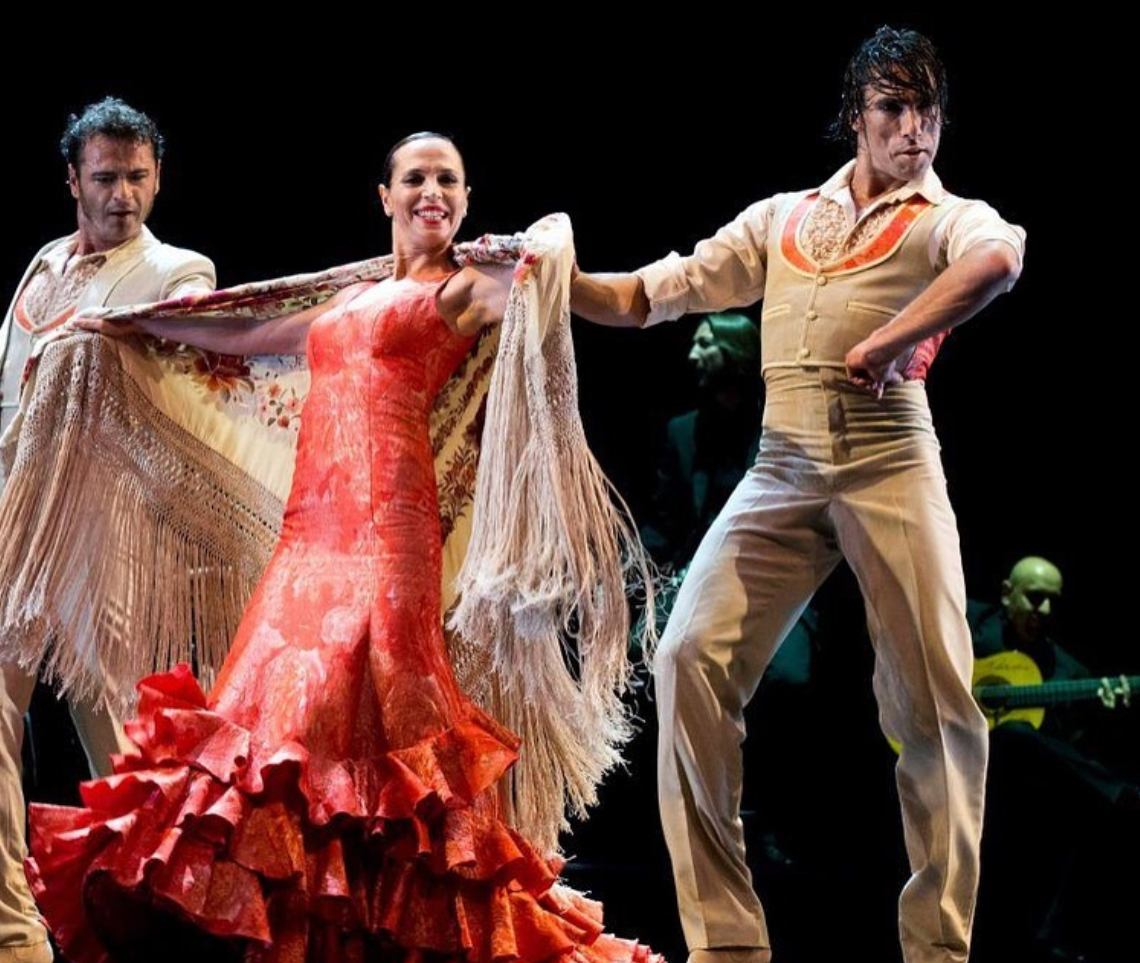
Immersed into the passional abyss of flamenco, Aida found an easiest way to express emotions. Years later she gained teacher’s experience at Maurice Bejar’s Rudra school in Lausanne, then managed to be the youngest artistic director of the National Ballet of Spain, and finally in 2001 she opened her own dance company. Aida Gomez Compañia de Danza repertoire filled with the rhythms of flamenco and bolero, transporting the audience directly to sultry Andalusia, the energy center of Spain, one of the world’s most dancing country.
During her career Aída gave master classes in Spain and other countries all over the world globe. In 2023 she began a new project with Nacho Duato as a teacher and choreographer.
Some information about the bolero dance.
Bolero emerged in the XVIII century as a fusion of folk seguidilla and elegant dances of the court theaters of the Classicism era. In Andalusia and La Mancha bolero was danced both in pairs and solo, the dance was accompanied by playing castanets and guitars nowadays bolero performed by a large number of dancers.
In the middle of the XIX century, a lot of dancing schools began to open in Spain. Exactly that moment became the birth for a new dance genre - Escuela Bolero which we can call Spanish classical dance. Escuela Bolero is closely related to flamenco, but they are two completely different styles with their own unique features.
Today there is a Spanish, Cuban and American bolero, over the years the dance has become more and more scenic and theatricalized.
Text by Sergey Laletin.
At the age of seven, Aida Gomez began studying classical dance, started professional career at fourteen, and soon become prima-ballerina of the National Ballet of Spain (Ballet Nacional de España). Seeking to expand her opportunities, Aida moved to dance company of the famous dancer and choreographer Joaquin Cortez.
Immersed into the passional abyss of flamenco, Aida found an easiest way to express emotions. Years later she gained teacher’s experience at Maurice Bejar’s Rudra school in Lausanne, then managed to be the youngest artistic director of the National Ballet of Spain, and finally in 2001 she opened her own dance company. Aida Gomez Compañia de Danza repertoire filled with the rhythms of flamenco and bolero, transporting the audience directly to sultry Andalusia, the energy center of Spain, one of the world’s most dancing country.
During her career Aída gave master classes in Spain and other countries all over the world globe. In 2023 she began a new project with Nacho Duato as a teacher and choreographer.
Some information about the bolero dance.
Bolero emerged in the XVIII century as a fusion of folk seguidilla and elegant dances of the court theaters of the Classicism era. In Andalusia and La Mancha bolero was danced both in pairs and solo, the dance was accompanied by playing castanets and guitars nowadays bolero performed by a large number of dancers.
In the middle of the XIX century, a lot of dancing schools began to open in Spain. Exactly that moment became the birth for a new dance genre - Escuela Bolero which we can call Spanish classical dance. Escuela Bolero is closely related to flamenco, but they are two completely different styles with their own unique features.
Today there is a Spanish, Cuban and American bolero, over the years the dance has become more and more scenic and theatricalized.
Text by Sergey Laletin.


